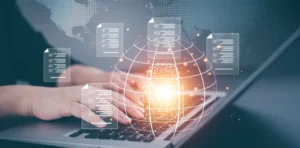
What is Information & Communication Technology (ICT)?
Information & Communication Technology (ICT) is the integrated use of digital technologies such as computers, networks, software, and telecommunications systems to collect, process, store, and transmit information, enabling efficient communication and data management across individuals, organizations, and global platforms.
Technology is transforming every industry. Our ICT programs provide hands-on, practical knowledge in modern digital tools, programming, cyber security, artificial intelligence, and cloud technologies.
These programs are designed to prepare learners for the digital economy, equipping them with technical expertise and problem-solving capabilities relevant to modern workplaces.
10 benefits of Information & Communication Technology
🌐 1. Enhanced Communication
ICT has revolutionized how people and organizations communicate. Emails, video calls, instant messaging, and social media allow real-time communication across the globe, breaking down geographical barriers and making the world feel smaller and more connected.
📚 2. Access to Information & Education
The internet has made knowledge available to almost anyone, anywhere. Online libraries, e-learning platforms, digital textbooks, and educational videos mean that a student in a remote village can access the same quality of information as someone in a major city. ICT has truly democratized education.
💼 3. Business Efficiency & Productivity
ICT tools — from cloud software and project management apps to automated accounting systems — allow businesses to work faster, smarter, and with fewer errors. Tasks that once took days can now be completed in minutes, freeing up time for more strategic work.
🏥 4. Improved Healthcare
Telemedicine, electronic health records, diagnostic software, and medical research databases have transformed healthcare delivery. Patients in rural areas can consult doctors remotely, and medical professionals can access patient history instantly, leading to faster and more accurate diagnoses.
🏛️ 5. Better Governance & Public Services
Governments use ICT to deliver services more efficiently — from online tax filing and digital identity systems to smart traffic management and e-voting. This reduces corruption, increases transparency, and makes public services more accessible to citizens.
💰 6. Economic Growth & Job Creation
The ICT sector is one of the fastest-growing industries globally. It creates millions of direct jobs (software developers, IT support, cybersecurity experts) and enables indirect employment by powering other industries like finance, retail, logistics, and manufacturing.
🌱 7. Environmental Benefits
ICT contributes to sustainability through smart energy grids, remote work (reducing commuting emissions), paperless offices, and data-driven environmental monitoring. Technology helps organizations track and reduce their carbon footprint more accurately.
🔒 8. Enhanced Security & Safety
From CCTV surveillance and biometric access control to cybersecurity systems and disaster early-warning systems, ICT plays a critical role in keeping people, data, and infrastructure safe.
🤝 9. Social Inclusion & Equality
ICT gives a voice to marginalized communities. Social platforms, digital banking (mobile money), and online marketplaces allow people who were previously excluded from the formal economy to participate, connect, and thrive.
🚀 10. Innovation & Research
ICT accelerates scientific discovery and innovation. Big data, artificial intelligence, machine learning, and simulation tools allow researchers to solve complex problems — from climate change modeling to drug development — at an unprecedented pace.
Here’s a comprehensive overview of the benefits of Information & Communication Technology (ICT):
Why ICT at SIMS?
Our trainers are industry practitioners with real-world experience. Every course includes hands-on projects and practical assessments aligned with current UAE market requirements.